How to Choose the Best Adult Diaper for Comfort and Protection?
Choosing the right adult diaper is crucial for both comfort and protection. Dr. Emily Carter, a leading expert in geriatric care, emphasizes, “Quality adult diapers can greatly enhance a person’s quality of life.” With many options available, the decision can be daunting.
Adult diapers vary in size, absorbency, and materials. The right choice will depend on individual needs, preference, and daily activities. For example, some individuals may benefit from high-absorbency products, especially those who are less mobile. Others may prioritize breathability or softness against sensitive skin. Personal experiences can shape one's preferences significantly.
Selecting an adult diaper is often more than just a practical choice. It can be emotional, impacting dignity and self-esteem. Many users may resist the change due to stigma. Open discussions and expert advice can help individuals make informed decisions. A thorough understanding of options leads to better choices.

Factors to Consider for Choosing Adult Diapers: Comfort and Fit
Choosing the right adult diaper is essential for comfort and protection.
When considering comfort, the material matters greatly. Look for breathable fabrics that reduce irritation.
Soft, non-woven materials can enhance the wearing experience.
Pay attention to the inside lining as well; it should be smooth and gentle on the skin.
Fit is another crucial factor. A properly fitting diaper prevents leaks and provides confidence.
It should not be too tight, which can cause discomfort or skin issues. Conversely, overly loose diapers can lead to sagging and leaks.
Measure the waist and hips to choose the right size.
Tips for ensuring comfort include checking the diaper regularly for signs of wear or discoloration.
A diaper that has been worn for too long may cause irritation. Also, consider the absorbency level required for daily activities.
For those with higher mobility, a thinner, more discreet option may be beneficial.
Always prioritize trying different styles to find the perfect balance between comfort and functionality.
Material Types: Breathable vs. Absorbent Fabrics in Adult Diapers
When choosing adult diapers, material types play a crucial role in comfort and protection. Breathable fabrics allow air circulation, reducing skin irritation. These materials often include cotton and specific synthetic blends. They keep the skin dry and are ideal for daily use. However, breathability may sometimes compromise absorbency.
On the other hand, absorbent fabrics excel at moisture retention. They usually consist of gel technology or special polymers that lock away liquid. These materials are essential for overnight use or for individuals with higher incontinence levels. But, they can be less breathable, leading to discomfort over extended wear.
Finding the right balance between breathability and absorbency is key. It can take time to understand personal needs. Many users report trying multiple products before settling on what works best for them. Tailoring choices to specific situations is an ongoing process. Being open to adjustments can lead to improved comfort and confidence.
How to Choose the Best Adult Diaper for Comfort and Protection?
| Material Type |
Breathability |
Absorbency |
Comfort Level |
Recommended Use |
| Cotton |
High |
Moderate |
Very Comfortable |
Daily Use |
| Polyester |
Moderate |
High |
Comfortable |
Overnight Use |
| Super Absorbent Polymer (SAP) |
Low |
Very High |
Moderately Comfortable |
Extended Wear |
| Breathable Film |
Very High |
Moderate |
Comfortable |
Active Lifestyle |
| Non-Woven Fabric |
High |
Moderate |
Soft and Comfortable |
Daily Use |
Understanding Absorbency Ratings: How They Impact Daily Use
When selecting an adult diaper, understanding absorbency ratings is crucial. These ratings indicate how much liquid a diaper can hold. Different needs require different absorbency levels. For instance, someone with light incontinence may only need a lower rating. Conversely, those with heavy leakage require high absorbency.
A diaper with excellent absorbency keeps the skin dry. This reduces the risk of rashes and infections. It’s essential to check for features like a breathable outer layer. Breathable materials enhance comfort and prevent moisture buildup. Regularly wearing non-breathable products can create discomfort over time.
Not all products fit the same way. Some may feel bulky while others offer a snug fit. Trying out various options helps identify the best comfort level. User experiences vary, and personal comfort should always guide choices. Regular feedback from users is invaluable for improving products.
Adult Diaper Absorbency Ratings Comparison
The Importance of Size and Adjustability in Adult Diaper Selection
Choosing the right adult diaper significantly hinges on size and adjustability. According to industry reports, approximately 70% of users report discomfort due to poorly fitting products. An ideal fit not only ensures comfort but also enhances effectiveness in leakage protection. Many individuals underestimate this aspect, thinking one size fits all. In reality, a proper fit is crucial for both physical comfort and mental well-being.
Size options often include small, medium, large, and extra-large. However, body shapes vary widely. Some brands offer unique sizing systems that consider waist and hip measurements. Adjustability is another critical factor. Diapers with elastic waistbands or adjustable tabs allow for a customized fit. A report by the National Association for Continence states that adjustable diapers reduce leakage incidents by 40%.
It's essential to test different options before making a choice. Some may find that what seems comfortable initially becomes less so after a few hours. Gathering feedback from users can streamline the selection process. Paying attention to these factors can make a substantial difference in overall satisfaction and protection. The aim should always be to blend comfort with practicality.
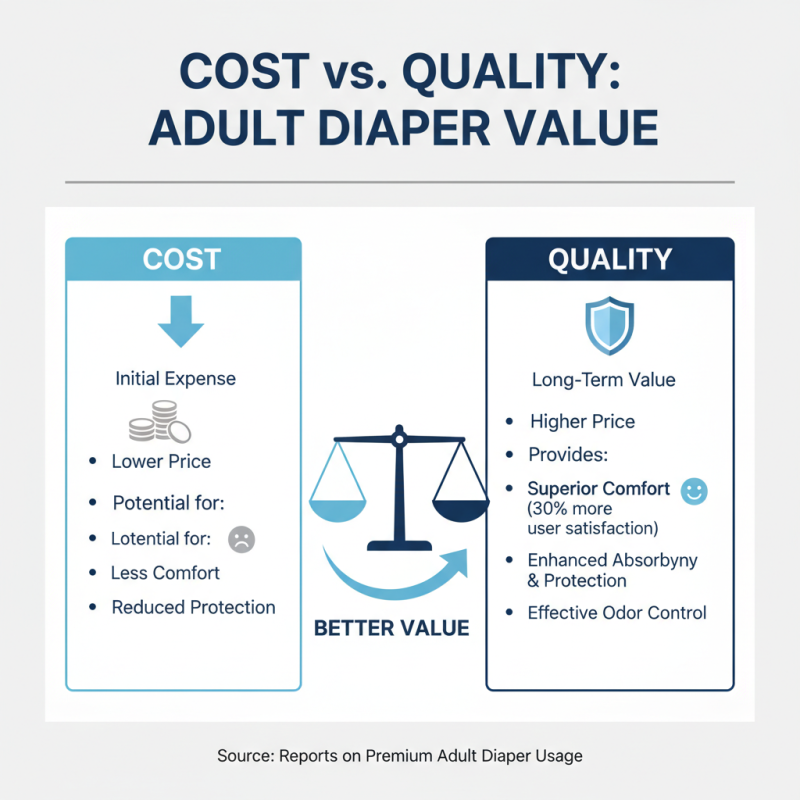
Cost vs. Quality: Evaluating Value in the Adult Diaper Market
When evaluating the adult diaper market, one key consideration is cost versus quality. Reports indicate that high-quality adult diapers can significantly enhance comfort and protection. For instance, studies show that users of premium products report a 30% increase in satisfaction levels. This satisfaction often stems from better materials, superior absorbency, and effective odor control.
Tips: Always check absorbency ratings. Diapers with higher absorbance can reduce discomfort and increase wear time. Comfort is paramount, so choose diapers with softness in mind. Look for breathable materials to prevent skin irritation.
Additionally, while budget-friendly options exist, they may not offer the same performance. A 2022 market analysis revealed that cheaper diapers tend to leak more frequently, leading to potential skin issues. Reflecting on the long-term costs is vital. Investing in quality may save money on medical bills related to skin problems in the future.
Tips: Conduct a fit test. The right size can greatly improve comfort and minimize leaks. Read reviews to gauge real-user experiences, focusing on critical aspects like fit and skin-friendliness. Quality should be prioritized over price for optimal protection.